
Silicone and acrylic are the two most common roof coating types, but they behave very differently, especially on flat roofs that pond water. Here is a straight comparison of why we install silicone systems for the conditions our customers actually face.
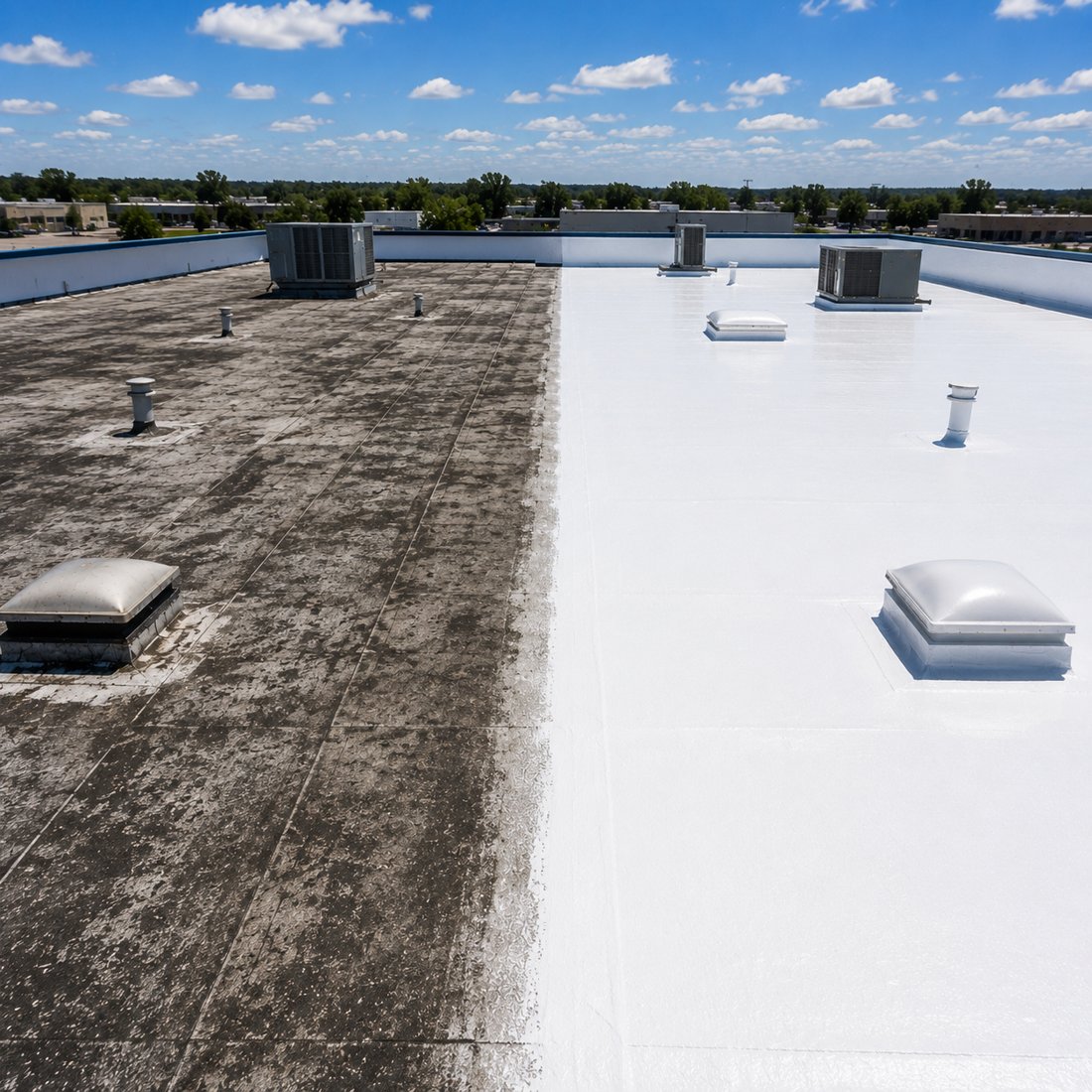
Silicone resists standing water indefinitely. Acrylic can soften, re-emulsify, and wash away where water ponds, a common flat-roof problem.
Both reflect UV well, but silicone holds its performance longer in harsh sun without thinning as quickly.
Silicone is highly durable and easy to recoat. Acrylic is lower cost up front but often needs more frequent maintenance.
For the flat and low-slope roofs we coat, silicone's resistance to ponding and UV makes it the more reliable long-term system.
Silicone, in most cases. Flat roofs pond water, and silicone resists standing water while acrylic can break down under it.
Acrylic can work on sloped roofs with good drainage and a tighter budget, but for ponding-prone flat roofs we recommend silicone.
Silicone generally holds its waterproofing longer, especially under ponding and intense UV, and recoats easily at the end of its life.
We focus on silicone and Eco-Dur systems because they perform best on the roofs we service. We will always recommend what is right for your roof.
Free, no-pressure roof inspection. If you truly need a replacement, we'll tell you.